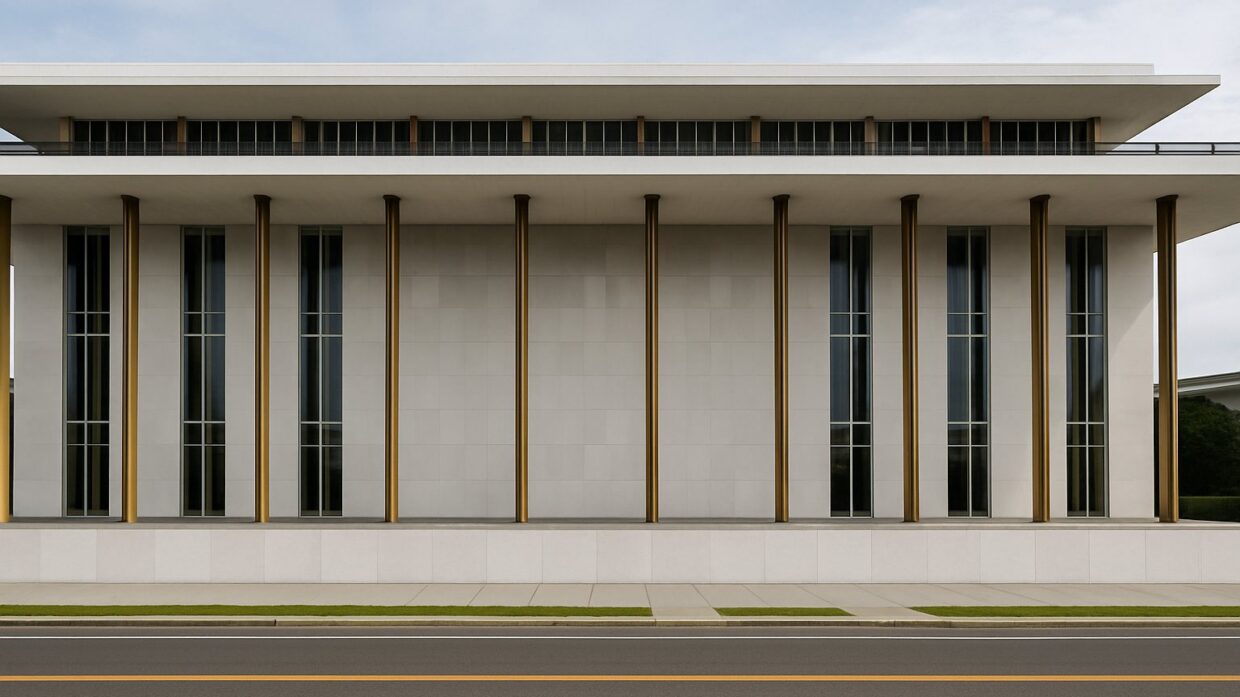
Photo: Well This Is News
Federal judge grills DOJ on Trump nameplate plan; agency warns removal could doom historic venue
Kennedy Center delays Trump nameplate decision until October as court considers case
Judge questions timeline as Kennedy Center weighs adding Trump's name back to building
Key Takeaways
- The Trump administration filed legal arguments claiming that federal law requires Trump's name on the Kennedy Center's facade, but the specific statute or contract language underlying this claim has not been disclosed in public reporting.
- Federal buildings are not typically demolished over naming disputes, yet the administration argued demolition could result from keeping Trump's name off the building; the legal or financial mechanism supporting this claim remains unexplained in available coverage.
- Judge Cooper's skepticism focused on the urgency of the September 8 deadline rather than on the merits of whether federal law actually requires the nameplate, leaving the fundamental legal question unresolved.
The Analysis
A federal judge interrupted a Trump administration lawyer within seconds of oral arguments, asking why the Kennedy Center needed to begin inscribing the president's name on September 8. U.S. District Court Judge Christopher Cooper's skepticism about the timeline reveals a core tension: the Trump administration submitted a court filing claiming that keeping Trump's name off the facade could endanger the building's federal status and trigger demolition, but the actual legal and financial mechanics of that claim remain unexplained in the public record.
What actually happened is this: the Kennedy Center, chartered by Congress in 1958 as the John F. Kennedy Center for the Performing Arts, removed Trump's name from the building's exterior in 2021. The Trump administration has sought restoration of the nameplate. During Thursday's hearing, Judge Cooper asked why a September 8 start date was necessary, and the Kennedy Center Board subsequently announced it would delay any nameplate addition until October 8 while the court deliberates.
The left-leaning framing, represented by NBC News coverage emphasizing the judge's "barrage of questions," underscores judicial skepticism about the administration's legal case. The emphasis falls on the judge's persistent questioning rather than on what specific statutory or contractual obligation the DOJ actually cited. What this framing leaves out: the actual legal text or precedent the administration is relying on. The NBC headline focuses on the drama of judicial pushback rather than identifying the substantive basis of the government's argument.
The right-leaning framing, presented by the Washington Examiner, centers on the procedural compromise: the board decided to wait until October. This framing treats the delay as a resolution rather than an open question. The Examiner headline emphasizes the board's decision to hold off, which linguistically reframes the story away from judicial skepticism and toward institutional deliberation. What this framing does not emphasize: Judge Cooper's underlying concern about the urgency or the legal claims that prompted his questions.
What neither side fully captures is the specific statutory or contractual language the Trump administration cited to argue that the building's federal status depends on Trump's name appearing on it. The PBS reporting notes the judge's line of questioning but does not establish what legal authority the DOJ invoked in the original filing. Federal buildings are not typically demolished because of naming disputes. The claim that keeping Trump's name off could lead to demolition requires explanation the available coverage does not provide. The public record does not establish why federal funding would be contingent on a nameplate, or whether the Kennedy Center's charter or federal agreements actually contain such a provision.
The timeline itself is the practical matter at issue: the administration wanted September 8, the judge questioned that date, and the board moved it to October 8. What remains unclear is whether the judge will ultimately permit the nameplate addition, whether any legal principle actually constrains the decision, or what the DOJ's demolition argument was grounded in. The reporting establishes that Judge Cooper pressed the administration hard on urgency but does not establish that his questioning reflects a verdict on the underlying merits.
The actual headline this story merits is: Federal judge questions speed and legal basis of Kennedy Center nameplate plan; board agrees to delay while court considers whether federal law requires Trump's name on the building.
The Kennedy Center naming dispute will establish whether federal courts can compel nameplate changes to congressionally chartered buildings based on executive interpretations of federal status requirements. Judge Cooper's skepticism about the administration's demolition claim matters because it will determine whether future administrations can use threatened loss of federal funding or building status to force naming changes at cultural institutions. If the court rejects the DOJ's legal theory, it creates precedent limiting executive power over nameplate disputes at federally chartered entities. If Cooper permits the addition, it establishes that federal naming authority extends to exterior signage on buildings Congress itself designated and that timeline urgency can override institutional deliberation. Either ruling reshapes how executive and legislative power interact over federal building nomenclature.