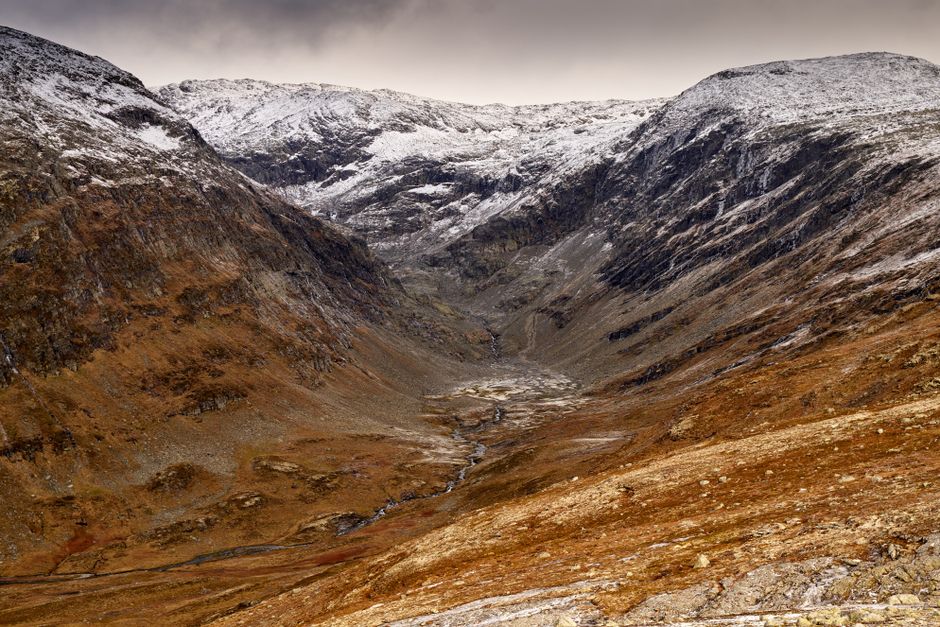
Photo: Barnabas Davoti
Glacial collapse triggers catastrophic Nepal floods; nearly 1,400 missing, mostly tourists swept away
Massive floods devastate Tibet and Nepal border region; torrential rains cause widespread destruction
Flash floods at Nepal-Tibet border kill hundreds, leave 1,400+ missing in mountainous tourism zone
Key Takeaways
- Death toll estimates from this disaster have ranged from 95 to 356 confirmed dead with hundreds to 1,400 missing, reflecting how remote terrain and severed communications make early casualty counts unreliable in mountain disasters.
- Neither left nor right framing adequately addressed whether Nepal and Tibet had early warning systems, evacuation protocols, or reconstruction capacity to manage such events, which are the actual measures of disaster preparedness.
- The variation in reported death tolls across outlets likely reflects timing differences in when updated casualty figures reached news organizations rather than deliberate misreporting, exposing a structural challenge in remote disaster coverage.
The Analysis
The death toll and missing person count in the Nepal-Tibet border flooding varies by more than 1,000 people depending on the source, which reveals how early disaster reporting struggles with verification in remote mountainous terrain with disrupted communications. The Guardian and NPR report approximately 1,400 missing with at least 356 confirmed dead. Breitbart reports 95 confirmed deaths with hundreds missing. These gaps reflect not dishonesty but the reality that initial casualty figures from high-altitude disaster zones depend on what information has reached coordination centers in accessible areas.
Left-leaning outlets emphasize the glacial collapse as the trigger, naming it explicitly and framing the disaster as a climate-adjacent phenomenon. The Guardian leads with "glacial collapse triggers flood" and NPR emphasizes the glacial mechanism. This framing is factually accurate, but it prioritizes environmental causation in a way that sets up a climate-narrative reading. The focus on foreign tourists, particularly British and American citizens named by The Guardian and MSNBC, serves another framing function: it emphasizes the human scale through familiar reference points and appeals to Western audiences. That choice is defensible journalism but does narrow the story toward international concern rather than the experience of local Nepali and Tibetan communities directly affected.
Right-leaning outlets lead with the immediate cause: torrential rains and swollen rivers. Breitbart's phrasing, "torrential rains and swollen rivers caused massive floods," treats weather as the primary driver rather than glacial mechanics. This is not incorrect, but it de-emphasizes the climate-change connection by naming only the proximate meteorological event. The lower death toll reported by Breitbart (95 confirmed) appears to reflect earlier reporting before updated counts circulated, rather than a deliberate minimization. Breitbart does not foreground the international victims, focusing instead on the geographic scope: Tibet and Nepal, roads and bridges, villages and landslides.
What neither framing addresses adequately is Nepal's existing vulnerability to such events and the infrastructure deficits that magnified damage. Bloomberg's focus on Prime Minister Balen Shah facing his "first crisis" and a "36-year-old" leadership team hints at institutional readiness questions but does not develop them. The reporting does not establish whether early warning systems exist in the region, whether evacuation protocols functioned, or whether reconstruction capacity is present. The missing context here is not about climate or weather mechanics, but about state capacity and preparedness.
The sequence of death toll updates, from Breitbart's 95 to The Guardian's 356, also raises questions about how quickly coordination improved. Early reports from disaster zones are unreliable by design: roads are destroyed, communications are severed, and counting casualties in remote villages takes time. The media's coverage reflects this reality but does not foreground it, which can leave readers uncertain about what the "true" toll is. In reality, current figures will likely shift again.
What makes this significant is not the competing narratives but the gap between early reporting and eventual accounting. The region's geography, tourism infrastructure, and climate dynamics all contributed to the scale of disruption. The real story is not what caused the flood, but whether systems existed to manage it, and whether they functioned.
This disaster will force Nepal and Tibet to confront whether their early warning systems, evacuation protocols, and emergency coordination actually function in terrain where communications collapse within hours of infrastructure damage. The death toll disparity across reporting outlets reflects a harder truth: remote mountainous regions lack the institutional capacity to verify casualties quickly, meaning governments cannot accurately assess what reconstruction requires or how many people remain unaccounted for days after the event. Prime Minister Balen Shah's administration now faces pressure to either build that capacity or accept future disasters will be measured in uncertainty rather than confirmed figures. The tourism infrastructure that drew foreign victims to the zone also means international governments will demand accountability for warning systems and rescue response, creating leverage for Nepal to upgrade disaster management institutions. Without that institutional investment, the next flood cycle will produce the same chaos and the same conflicting casualty counts.