Photo: Well This Is News
Vance Calls Canada a 'State,' Then Backtracks With 'Freudian Slip' Excuse
El-Sayed Distances From Hasan Piker as Decade-Old Vance Quote Undercuts His Attack
Vance's Canada Remark Sparks Debate as El-Sayed Campaign Faces Scrutiny
Key Takeaways
- Both the left and right focused entirely on Vance's phrasing and El-Sayed's associations rather than examining whether Vance's underlying claim about Canadian trade policy actually holds up to scrutiny.
- The factual question of whether Canada genuinely treats Chinese imports more favorably than American agricultural products remains unanswered in the political coverage on either side.
- Neither campaign is publicly defending or challenging the actual trade data that would determine if Vance's core complaint is economically justified.
The Analysis
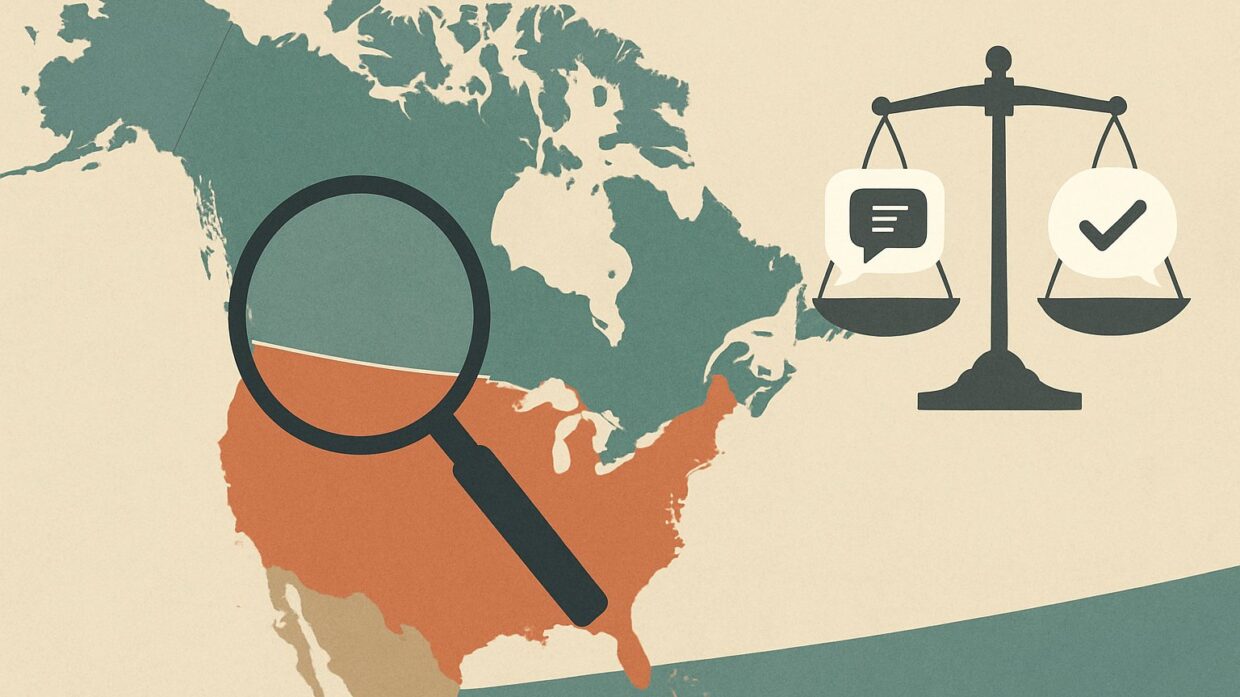
JD Vance told Maine voters 'We have to remember Canada is a state' during a campaign stop, then characterized the remark as a Freudian slip rather than a stated policy position. The comment arrived amid his broader argument that Canada treats Chinese goods more favorably than American farm products, which he called 'insanity.' What happened next reveals how the two sides framed the remark entirely differently, and what neither framing addresses is the substantive debate about trade that prompted it.
The documented sequence is straightforward. Vance made the Canada comment. HuffPost reported it as a 'Freudian slip,' quoting Vance's own characterization. Fox News reported the same comment but contextualized it within Vance's trade criticism, emphasizing that his concern was Ottawa's treatment of American agricultural products relative to Chinese imports. The sources agree on what was said. They diverge on what it means.
The left frame emphasizes that Vance joked about or suggested annexing Canada, treating the remark as either a gaffe or a casual expression of expansionist sentiment. HuffPost led with the Freudian slip angle, which invites readers to interpret the comment as revealing an unconscious impulse. That framing leaves out the immediate context: Vance was mid-argument about trade imbalances. It also leaves out that Vance himself offered the Freudian slip explanation, which undercuts the narrative that he was caught revealing hidden thinking. The left emphasis on the gaffe serves a political function: it allows the comment to be discussed as a personality flaw rather than as commentary on trade policy.
The right frame emphasizes that Vance's substantive point was about Canadian trade policy favoring China. Fox News reported the Canada remark but did not lead with it; instead, the outlet used it to illustrate the larger claim about trade treatment. That framing leaves out the oddity of calling another country a state, which is linguistically distinct from criticizing trade policy. It also leaves out that some voters may have found the remark jarring enough to remember it for reasons unrelated to agriculture. The right emphasis on trade substance serves its own function: it shifts the conversation away from the unusual phrasing and toward policy argument.
What neither side is fully addressing is what the trade complaint actually establishes. Vance claimed Canada treats Chinese goods more favorably than American products. That is a factual claim that either holds or does not. Neither the left frame nor the right frame engages with whether his underlying premise is accurate, whether the trade terms he described are actually in effect, or how significant the differential truly is. Both sides treated the Canada remark itself as the story, leaving the trade argument underneath unexamined.
Simultaneously, coverage has focused on Michigan Senate candidate Abdul El-Sayed, who attempted to criticize Usha Vance but found his own attacks rebuffed by a decade-old passage from JD Vance's memoir 'Hillbilly Elegy' that undercut the criticism. El-Sayed has also distanced himself from Twitch streamer Hasan Piker after Piker made remarks about Jewish Americans that prompted bipartisan backlash, including criticism from Democratic Representative Hillary Scholten. The El-Sayed-Piker association raised questions about vetting and association that the right emphasized.
What neither campaign is addressing is the actual trade data. The question is not whether Vance phrased his Canada comment oddly or whether El-Sayed's associations are scrutinized fairly. The question is whether his trade complaint is defensible on the merits. Until that argument is examined, both frames remain incomplete.
Canada's actual trade relationship with American agricultural exports will determine whether Vance's underlying complaint has merit, yet coverage has bifurcated into either dismissing the remark as a gaffe or accepting the trade premise without verification. Neither the left frame treating the comment as revealing character flaws nor the right frame pivoting to trade substance examines the concrete data: whether Canadian tariff structures or trade agreements actually disadvantage American farm products relative to Chinese goods, and whether such disparities are significant enough to warrant policy attention. Without this analysis, voters cannot distinguish between legitimate trade grievance and rhetorical misdirection, allowing both campaigns to avoid accountability on the factual claims that should drive policy debate.