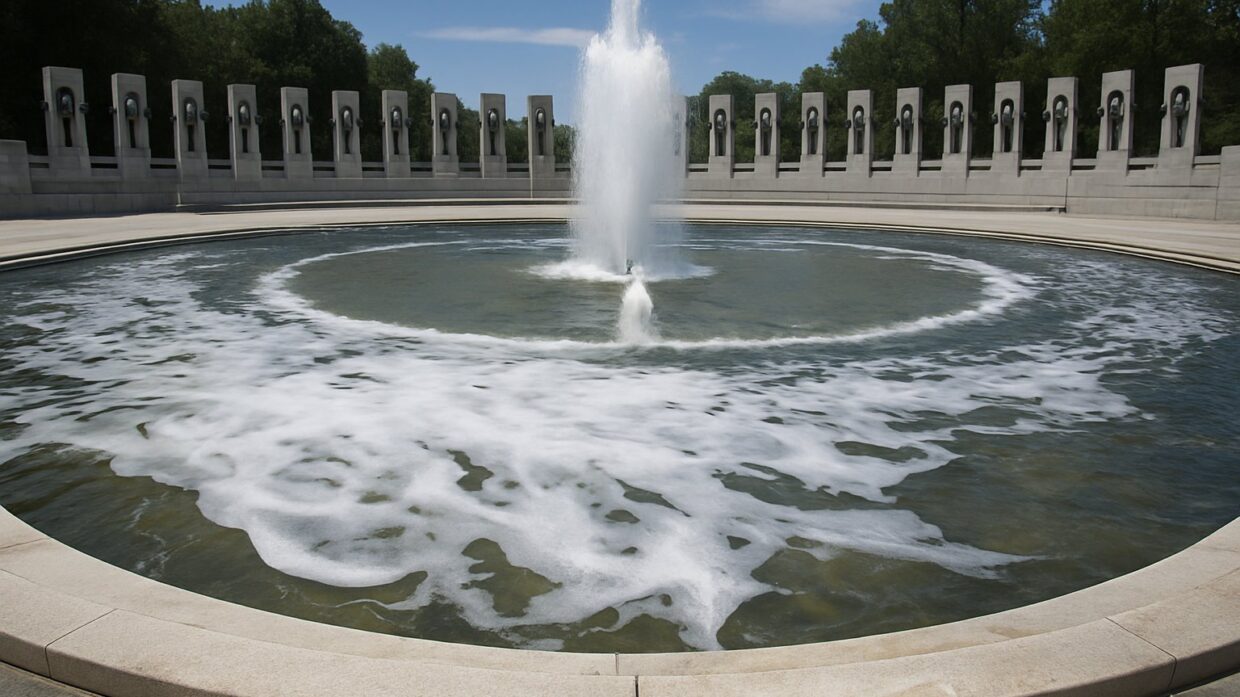
Photo: Well This Is News
Federal authorities arrest woman in World War II Memorial vandalism case
Trump vows to track down 'animals' who desecrated WWII Memorial; suspect now in custody
Woman charged with two felonies in World War II Memorial vandalism; graffiti and soap in fountain
Key Takeaways
- The graffiti message 'Clean hands dirty money' suggests the vandalism was motivated by a message about financial corruption or hypocrisy, but neither left nor right coverage explored what actually prompted Farris to target this memorial.
- Federal felony charges rather than misdemeanor charges represent a significant prosecutorial escalation, yet no reporting has disclosed U.S. Attorney Pirro's reasoning for choosing this charging level.
- Trump's claim linking this vandalism to damage at the Lincoln Memorial remains unsubstantiated and disputed by reporting, yet this connection was amplified without verification by right-leaning outlets.
The Analysis
A woman named Melissa L. Farris has been arrested and charged with two felonies for vandalizing the World War II Memorial in Washington, D.C., according to U.S. Attorney Jeanine Pirro's announcement on Friday. The vandalism occurred Thursday and included spray-painted graffiti reading either "Clean hands dirty $" or "Clean hands, dirty money" along with soap dumped into the memorial's fountain, which overflowed with bubbles.
The documented facts establish the following: The memorial is located on the National Mall in Washington. The graffiti was applied in neon-orange or red spray paint. U.S. Park Police investigated. Pirro filed two felony charges. The arrest occurred before Friday's announcement. The fountain was shut down for the incident. No prior record clearly establishes Farris's stated motive for the vandalism.
Left-leaning outlets, particularly NBC News, led with the arrest and federal charges without editorializing the nature of the vandalism. The framing emphasized law enforcement's swift response and the DOJ's action. This coverage leaves out what the right emphasizes: the symbolic significance of vandalizing a war memorial and the broader context Trump provided about memorial desecrations.
Right-leaning outlets used language explicitly tied to desecration and sacred violation. Fox News, The Daily Wire, and Breitbart described the memorial as "sacred," "iconic," and "desecrated." The Daily Wire and Breitbart quoted Trump's statement calling the vandals "animals" and his framing of the incident as part of a pattern affecting other memorials, including the Lincoln Memorial reflecting pool. This language choice serves a framing function: it positions the vandalism not as property damage but as an attack on American reverence.
What neither side fully captures is the substance of the graffiti itself. The phrase "Clean hands dirty money" suggests the vandalism may have been motivated by a message about financial corruption or hypocrisy, not simply anti-American sentiment. Neither left nor right coverage foregrounds what Farris's stated message was or what prompted her to target this specific memorial at this specific moment. The left's restraint and the right's symbolic framing both leave out this question entirely.
The public record does not yet establish Farris's stated motive, her affiliation with any organization, or what inspired the timing of the vandalism. Trump's linking of this incident to other recent memorial desecrations remains unsubstantiated by the available reporting. The Hill reported that Trump "tied the painting incident at the memorial to vandalism he says damaged the Lincoln Memorial reflecting pool," but noted "there has been significant controversy" around that claim, indicating Trump's assertion may be disputed.
One significant context both framings omit: federal felony charges for vandalism are prosecutorial decisions that escalate property damage into serious criminal territory. The specific charges Pirro filed and her reasoning for charging felonies rather than misdemeanors remains not disclosed in any of the available reporting.
The underlying question is whether this is an isolated incident of property destruction or evidence of a coordinated pattern targeting American monuments. The available evidence does not yet establish which.
Federal prosecutors escalated simple vandalism into dual felony charges, setting a precedent for how memorial defacement will be prosecuted going forward. The specific charges Pirro selected and her reasoning for bypassing misdemeanor options remain publicly undisclosed, meaning the DOJ has established serious federal consequences for monument damage without explaining the legal threshold that triggered felony treatment. This prosecutorial choice will influence how similar incidents are handled across the country and whether vandalism of federal property becomes routinely treated as a felony matter. The graffiti's actual message, "Clean hands dirty money," suggests a corruption protest rather than anti-American vandalism, yet neither law enforcement statements nor media coverage has explored whether the defendant's stated motive warranted the felony response or whether the symbolic nature of the target inflated the charges beyond comparable property destruction cases prosecuted as misdemeanors elsewhere.