Photo: Well This Is News
Senate confirms Jay Clayton as intelligence director despite Democratic concerns over politicization
Senate confirms Trump's intelligence pick Clayton after months of Democratic opposition
Senate confirms Jay Clayton as director of national intelligence on party-line vote
Key Takeaways
- Intelligence director confirmations have shifted from bipartisan consensus to strict party-line votes, but neither side has explained when or why this structural change occurred.
- Clayton's lack of intelligence background became a focal point for Democratic criticism, but coverage does not establish what specific intelligence expertise the role actually requires or what prior directors provided.
- The unresolved Section 702 dispute remains entangled with leadership confirmations, obscuring whether Democratic opposition targets Clayton's fitness or reflects strategic positioning on surveillance authority.
The Analysis
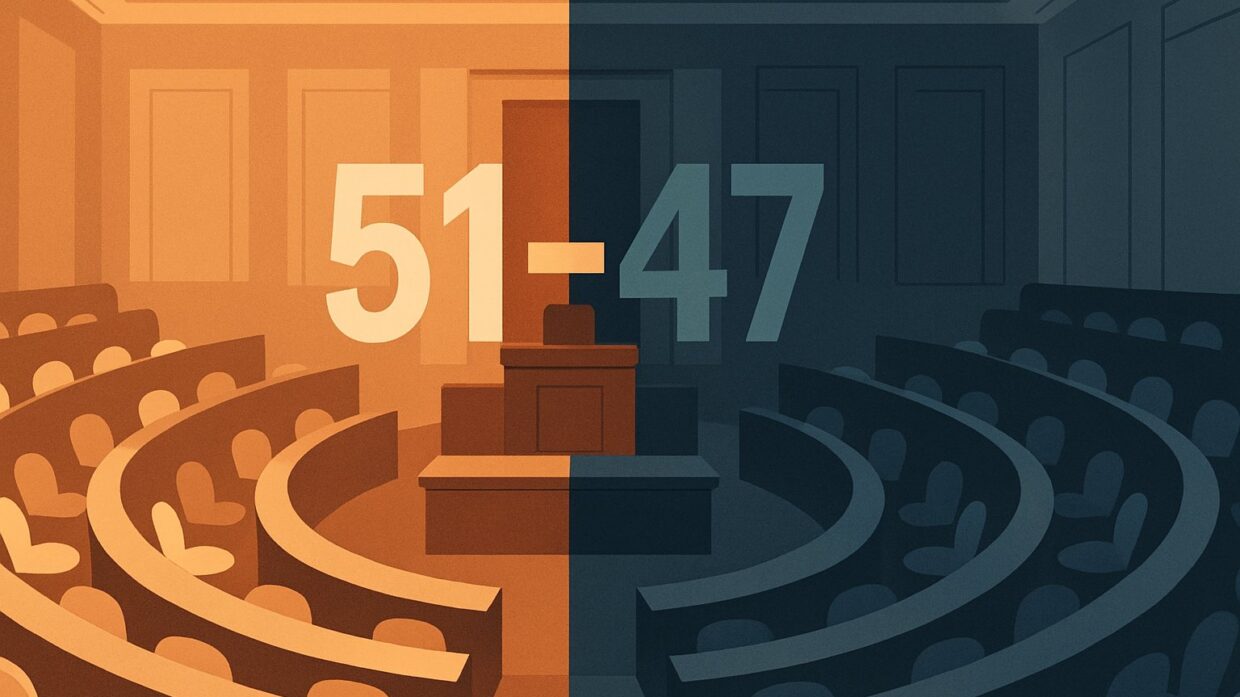
The Senate confirmed Jay Clayton as director of national intelligence on a 51-47 party-line vote, marking the latest intelligence leadership appointment to fracture along strict partisan lines, a break from historical precedent that neither side's framing adequately explains. Clayton, a federal prosecutor, replaced acting director Bill Pulte after months of Democratic opposition to both men, but the coverage from both sides obscures what the vote actually represents and what specific concerns drove the resistance.
What actually happened: Republicans unified behind Clayton's nomination on Tuesday evening. The vote was entirely along party lines, with no crossover from either side. This followed Pulte's announcement that he would step down, reportedly hours before the vote. Clayton's background as a federal prosecutor with no prior intelligence community experience became a focal point of Democratic argument, though the sources do not establish what specific intelligence work or analytical expertise Democrats expected the role to require. The confirmation leaves Section 702 of the Foreign Intelligence Surveillance Act unresolved, a surveillance authority that both parties have historically supported but that has become entangled in current negotiations.
The left's framing, represented in NPR and HuffPost coverage, emphasizes that Clayton could "politicize intelligence at President Trump's direction" and notes his lack of intelligence community background. This language suggests the concern is about institutional integrity and the independence of the intelligence apparatus from executive pressure. What this framing leaves out is any explanation of what specific decisions or statements from Clayton prompted the politicization concern, or what prior intelligence directors did in their roles that Clayton might not. The coverage does not foreground whether Democratic resistance was rooted in Clayton's actual record or in broader skepticism about Trump appointees to sensitive positions.
The right's framing, from Fox News and The Daily Wire, emphasizes that Democrats "demanded a replacement" and mounted "months of opposition," positioning the resistance as political obstruction rather than policy concern. This language implies Democrats were simply blocking Trump's picks as a matter of partisan reflex. Fox News specifically notes that Clayton's confirmation "has yet to break the partisan logjam over Section 702 FISA reauthorization," suggesting Democrats are using intelligence leadership as leverage in a separate surveillance authority dispute. What this framing underplays is whether Democrats raised specific competency or ethics concerns about Clayton himself, or whether their opposition was indeed strategic.
What neither side adequately addresses is the historical context. Intelligence director positions have traditionally commanded bipartisan confirmation support, with nominees from both parties confirmed with substantial Democratic or Republican backing. The shift to party-line voting on intelligence leadership represents a structural change in how the Senate treats these appointments, but neither the left nor right framing engages with when or why that shift began, or what it signals about the politicization of the intelligence apparatus as an institutional matter rather than as a concern about any single nominee.
The underlying question is whether resistance to Clayton was rooted in specific concerns about his fitness for the role or in broader partisan conflict over intelligence priorities, particularly Section 702. The available reporting does not establish which. What is clear is that intelligence leadership is now subject to the same party-line confirmation dynamics as cabinet posts, a change with consequences for how intelligence briefings get framed and which threats get prioritized, but one that both framings treat as background noise rather than the actual story.
The confirmation of intelligence leadership along strict party lines rather than through bipartisan consensus signals a fundamental institutional breakdown in how the Senate approaches intelligence oversight. When the director of national intelligence position transforms from one requiring broad coalition support to one decided by partisan vote count, the intelligence community loses its traditional insulation from electoral politics, meaning threat assessments and intelligence priorities now shift with partisan control of the chamber rather than with actual security conditions. This matters concretely because intelligence briefings to Congress, the foundation of legislative oversight of covert operations and surveillance programs, now carry implicit partisan framing from leadership selected by one party alone, eroding the shared factual baseline that oversight requires. The Senate's acceptance of party-line voting on intelligence positions accelerates the dismantling of institutional checks that historically constrained executive pressure on intelligence agencies, enabling whichever party controls the chamber to appoint directors accountable primarily to partisan interests rather than to the intelligence profession itself.