Photo: Well This Is News
Nation honors Lindsey Graham as his final Russia sanctions work advances
Graham's legacy: funeral honors match final push on sanctions as Republicans vie for seat
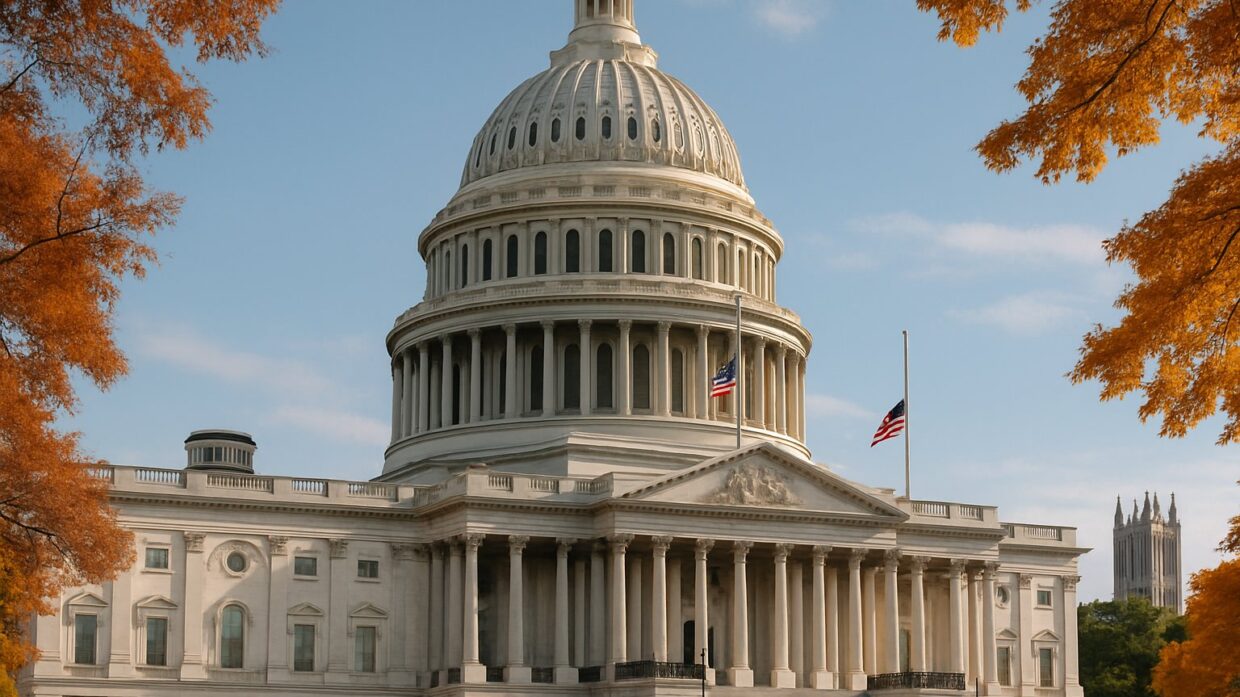
Sen. Lindsey Graham remembered at Capitol and Cathedral as successor race begins
Key Takeaways
- The Senate voted on Graham's Russia sanctions bill on the same day as his funeral service, a scheduling choice that remains unexplained and appears to lack established institutional precedent.
- Neither left nor right coverage examined the 10-plus Republican candidates filing for South Carolina's compressed special primary or how Graham's death reshapes the state's political landscape.
- Graham visited Kyiv days before his death and secured international agreement on sanctions, but reporting does not clarify whether the Senate vote timing was planned before his death or adjusted afterward.
The Analysis
Sen. Lindsey Graham's funeral on Tuesday at the U.S. Capitol and Washington National Cathedral drew President Trump, Ukrainian President Zelenskyy, and other world leaders, yet the timing of his death created a distinct editorial choice about how to frame what happened: as a moment of remembrance, or as a moment to advance unfinished legislative work.
The verified facts establish what occurred: Graham died after visiting Kyiv, where he secured international agreement on sanctions targeting Russian energy exports. A funeral ceremony took place at the Capitol followed by services at the National Cathedral. President Trump delivered remarks. The Senate scheduled a vote on Graham's Russia sanctions legislation for the same day as the funeral service. South Carolina Republicans filed paperwork for a special primary election, with at least 10 candidates competing for an Aug. 11 special GOP primary election to fill his seat. Ukrainian President Zelenskyy attended the funeral, his presence marking Graham's final foreign policy initiative.
The left framing, as presented by NBC News, emphasizes "the nation saying goodbye" and structures coverage around Graham's "landmark" sanctions work advancing in tandem with his death. The language chosen, "final act as a senator," and the emphasis on Zelenskyy's attendance, positions the funeral moment as vindication of Graham's Ukraine policy. What this frame leaves out is any tension between holding a funeral and conducting Senate business on the same day, or any examination of what political utility the timing may have served for the sanctions legislation.
The right framing, as presented by Fox News, phrases Graham's sanctions bill as his "final mission" and describes the funeral as world leaders gathering "to honor him." The headline structure, placing the sanctions vote and funeral in equivalent narrative weight, suggests the two events are parallel accomplishments rather than events with competing claims on public attention. The frame emphasizes Graham's legislative legacy and the appearance of continuity in his work, but does not examine what happens to the seat itself or the Republican succession question.
What neither side fully addresses is the institutional precedent being set. Senate business proceeding on a senator's funeral day is unusual. The public record does not establish whether this reflected the family's wishes, Graham's own prior preferences, or a deliberate decision to maximize legislative momentum at a moment of national attention on the chamber. Graham visited Kyiv days before his death, suggesting his final acts were consciously oriented toward the sanctions work, but the coverage does not examine whether the timing of the Senate vote was planned with that knowledge or adjusted after his death.
The other unmentioned dynamic is the succession. South Carolina's special primary, scheduled for Aug. 11, means the state has compressed its candidate filing and voting timeline. At least 10 Republicans filed for the race, yet the funeral coverage gives minimal attention to who those candidates are, what they represent, or how Graham's death reshapes the Republican primary landscape in the state. The left and right both focus on Graham himself rather than on what his absence means for Republican control of the Senate or South Carolina's political future.
What this convergence reveals is that both framings treat Graham's death as a moment to settle his legacy rather than a moment to examine succession. The sanctions legislation is presented as his final work advancing successfully. The funeral is presented as appropriate honor. What remains unexamined is whether the Senate vote timing served legislative necessity or political theater, and whether South Carolina Republicans are prepared to replace him.
Graham's death in the immediate aftermath of securing sanctions against Russian energy exports created an opening for the Senate to advance legislation while public attention was focused on the Capitol and national mourning. By scheduling a vote on the same day as his funeral service, the chamber established a precedent that legislative business can proceed during a senator's funeral ceremony without public examination of whether timing served political momentum or legislative necessity. This matters because it normalizes compressing the ceremonial and procedural functions of the Senate into a single day of heightened emotional intensity, potentially affecting how future chambers handle similar situations. More immediately, it leaves the succession question in South Carolina almost entirely unexamined in mainstream coverage, with ten Republican candidates competing for an August special primary without substantive public scrutiny of who they are or how they might reshape Senate dynamics. The institutional precedent compounds the succession vacuum: a seat representing a senior senator with decades of foreign policy influence will be filled through an accelerated primary process largely overshadowed by