Photo: Well This Is News
Trump's 50% Canadian tariffs risk inflation spike, economic turmoil with key allies
Trump targets Canadian 'discrimination' with 50% tariffs on autos, dairy, alcohol
Trump imposes 50% tariffs on Canadian goods including autos, dairy, alcohol
Key Takeaways
- The Trump administration invoked the USMCA trade agreement and dispute resolution mechanisms without attempting to use them, raising questions about why formal bilateral negotiation or WTO-style remedies were bypassed entirely.
- Trump imposed similar tariffs on Canada in 2018 and 2019 that were partially rolled back by late 2020, suggesting this move represents a return to his first-term approach rather than a new strategy, but the administration has not explained whether tariff-first negotiation proved effective last time.
- Neither the administration's claims about Canadian discrimination nor the economic impact projections are supported by detailed trade data showing specific imbalances or quantifying how Canadian protectionism compares to American protectionism in comparable sectors.
The Analysis
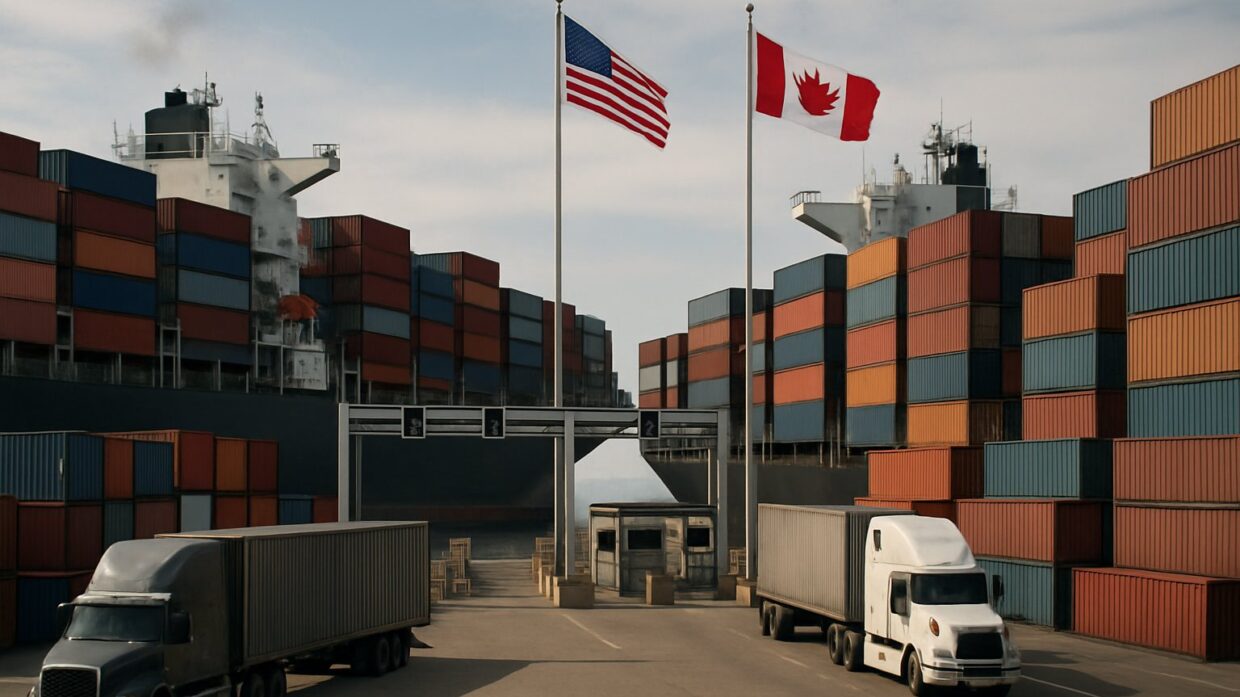
Trump announced Monday a 50% tariff on Canadian goods including automobiles, dairy, alcohol, hockey sticks, wine, and cement, citing what White House officials describe as discriminatory Canadian trade practices against U.S. exports. The move represents the first major tariff action of his second term and escalates bilateral trade tensions that have grown since his inauguration in January 2025.
The Trump administration's stated justification centers on three product categories. Officials claim Canada has maintained discriminatory barriers against U.S. automobiles, dairy products, and alcoholic beverages. The White House framing specifically emphasizes that these tariffs are retaliatory responses to existing Canadian restrictions, not unilateral protectionism. Administration officials framed the action around the language of reciprocal trade enforcement, arguing Canada had violated free-trade principles first. This framing leaves out that Canada and the United States have operated under the USMCA trade agreement since July 2020, which includes dispute resolution mechanisms that neither side has invoked in this instance. The Trump statement does not explain why formal trade remedies were bypassed in favor of unilateral tariffs.
The left framing, present in The Guardian and MSNBC coverage, emphasizes economic disruption and inflation risk rather than the alleged Canadian conduct. This coverage leads with Trump's tariff percentage rather than his justification, places economic consequences in the opening paragraphs, and quotes analysts warning about consumer price impacts. The Guardian headline foregrounds "turmoil" as the lead consequence. What this framing underplays is that the Trump administration did make specific product-category claims, even if those claims lack detailed supporting documentation in the immediate reporting. The left coverage also does not address whether Canadian protectionism in these sectors is quantifiably greater than American protectionism in comparable sectors.
The right framing, present in Breitbart, emphasizes the administration's discrimination narrative and lists the tariff targets without leading with economic consequences. Breitbart's coverage uses the word "discrimination" in its headline and frames Trump as taking decisive enforcement action. This framing leaves out that the administration has not released detailed trade data showing the specific ways Canada discriminates or how these tariffs relate to documented trade imbalances. It also does not address the risk that Canada will retaliate, which is standard practice in trade disputes.
What neither side fully captures is the institutional question: both the U.S. and Canada have mechanisms under the USMCA to address exactly these kinds of disputes. The tariff announcement comes without evidence that either country attempted formal dispute resolution. The public record does not explain why bilateral negotiation or formal WTO-style remedies were not pursued first. Additionally, neither framing addresses the prior trade history. Trump imposed substantial tariffs on Canada in 2018 and 2019, which were partially rolled back in late 2020. The current action occurs in the context of that unresolved history, which shapes what is realistically possible in any retaliatory cycle.
The underlying question is whether this represents a new approach to trade enforcement or a return to the tariff pattern of Trump's first term. The available evidence suggests this is consistent with the earlier approach, but the reporting does not establish whether Trump's economic team has concluded that tariff-first negotiation was effective last time.
These tariffs bypass the USMCA dispute resolution process both countries agreed to use, establishing that Trump will circumvent existing trade law rather than activate it. This sets a precedent that bilateral trade agreements function as optional frameworks, not binding commitments. When Canada retaliates with its own tariffs on American goods, U.S. companies will face countermeasures without having access to the negotiation record that formal dispute resolution would create. The auto industry, already operating on thin margins across North America's integrated supply chains, will absorb immediate cost increases that formal channels might have prevented. This move signals to other trading partners that the U.S. treats signed agreements as starting positions for unilateral action, fundamentally altering how future trade negotiations will proceed and how companies calculate the stability of their international operations.