Photo: Well This Is News
Psaki highlights troubling footage from Trump-aligned Great American State Fair
Massachusetts woman defies Democratic governors boycotting Great American State Fair
Great American State Fair draws Democratic boycott and conservative backing amid partisan cultural divide
Key Takeaways
- No reporting has disclosed the specific exhibits, messaging, or programming at the Great American State Fair that prompted the Democratic governors' boycott decision.
- Both sides are attributing motives to each other without establishing what actually occurred at the event, suggesting this is functioning as a cultural proxy conflict rather than a dispute over documented content.
- A complete picture of this controversy requires the organizers' stated purpose for the Freedom 250 celebration and the specific reasons governors announced for their boycott, information that has not appeared in available coverage.
The Analysis
The Great American State Fair has become a focal point for partisan conflict, but the actual nature of what occurred at the event remains underreported while both sides frame it through opposing cultural narratives.
What is documented: The Great American State Fair featured state pavilions and exhibits as part of the Freedom 250 celebration. Democratic governors, including Massachusetts Governor Maura Healey, boycotted the event. MSNBC host Jen Psaki showed clips from the fair on her program that she presented critically. A Massachusetts woman attended despite the boycott and attracted media coverage. Conservative outlets provided coverage of state pavilion exhibits and promotional content around the fair.
The left frame, represented by HuffPost and Psaki's commentary, emphasizes that footage from the fair was problematic enough to warrant public criticism and framing as "embarrassing." Psaki's language choice to call on audiences to "pay very close attention" suggests the footage itself communicates something objectionable without requiring explicit condemnation. This framing avoids specifying what exactly in the footage warranted concern, leaving that interpretation to the viewer. The boycott by Democratic governors is presented as a response to the event's character or messaging, but the reporting does not establish what specific policies, exhibits, or statements prompted the governors' decision not to attend.
The right frame, represented by Fox News and The Federalist, emphasizes that Democratic governors' boycott constitutes abandonment of a patriotic celebration and that individuals who attended are exercising freedom in opposition to political correctness. Fox News uses the language "shameful" to describe the governors' decision to boycott rather than the event itself. The Federalist's coverage of individual pavilions and promotional content around Independence Day celebrations frames the event as a straightforward patriotic gathering. This framing avoids addressing whether there were specific features of the fair that prompted the governors' decision to stay away.
What neither side fully captures: The reporting does not establish what specific content, messaging, or exhibits at the Great American State Fair prompted the Democratic boycott. Without that information, it remains unclear whether governors objected to particular state pavilion displays, sponsorship arrangements, organizers' stated goals, or the broader Freedom 250 branding. The left's framing assumes the fair's problematic nature is self-evident in its footage, while the right's framing assumes the boycott was purely political grandstanding. The public record does not disclose the substantive reasons governors cited for their decision.
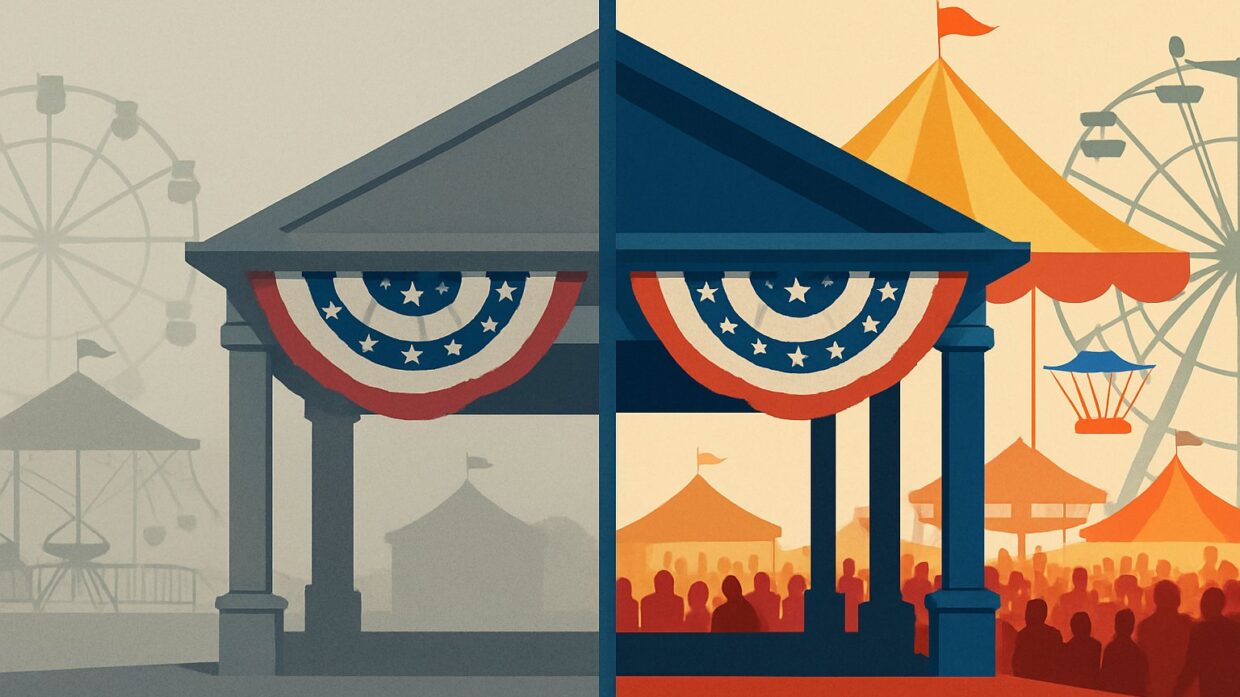
The underlying question is whether this represents a genuine dispute over the content and messaging of a public event or a symbolic political division where both sides are performing for their base. The specific details that would answer that question, the fair's stated programming and explicit messaging, appear in neither the criticism nor the defense. What emerges instead is a cultural proxy conflict where each side attributes motives to the other without establishing what actually happened at the fair that made it controversial.
A complete understanding of this story requires knowing what the state pavilions displayed, what the organizers' stated purpose was for the Freedom 250 celebration, and what specific governors said when they announced their boycott. None of that information appears in the available coverage.
The Great American State Fair boycott reveals how partisan media constructs opposing narratives without establishing what actually prompted Democratic governors to stay away. Neither left-leaning outlets that criticized the event's "problematic" footage nor conservative outlets celebrating it as patriotic reporting disclosed the fair's stated messaging, pavilion content, or the governors' explicit reasons for boycotting. This absence matters because it demonstrates institutional failure across political media to treat public events as subjects requiring factual documentation rather than as cultural battlegrounds where motives are assumed and outrage is performed. When major news organizations can present fundamental disagreement about a public gathering without reporting what the gathering actually contained or what its organizers intended, voters lose the ability to form independent judgments, instead inheriting pre-packaged interpretations from their preferred outlets. The fair itself becomes irrelevant; what matters is the performance of opposing tribal loyalty.