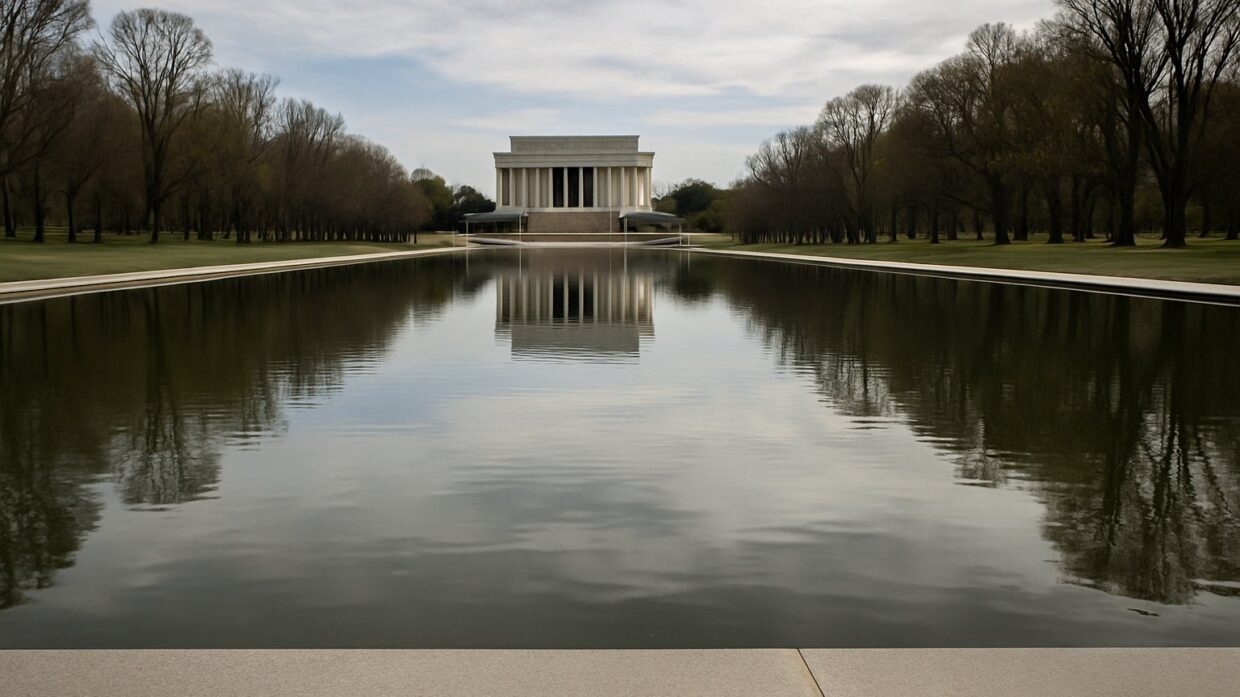
Photo: Well This Is News
U.S. Olympic canoeist charged with damaging Lincoln Memorial Reflecting Pool
Ex-Olympian indicted after allegedly ripping sealant from Lincoln Memorial Reflecting Pool
Former Olympic canoeist David Hearn indicted on felony destruction of property charge in Reflecting Pool case
Key Takeaways
- The public record contains almost no information about what motivated Hearn to allegedly damage the pool, whether he made any statement about his actions, or whether he has prior criminal history relevant to understanding the case.
- An indictment is a charging decision based on probable cause, not a proven guilt or a complete factual record, yet neither side's reporting adequately explains this legal distinction to readers.
- The involvement of U.S. Attorney Jeanine Pirro and reported presidential attention to the case raises unanswered questions about whether standard prosecutorial practices apply to federal monument damage or whether political considerations influenced the charging decision.
The Analysis
A D.C. grand jury indicted 67-year-old Olympic canoeist David Hearn on Thursday on a single felony count of destruction of property related to alleged damage at the Lincoln Memorial Reflecting Pool, but the actual facts of what happened remain largely opaque in the available reporting. The indictment itself is the only confirmed event; nearly everything else about the incident remains undisclosed.
Here is what the public record establishes: Hearn was charged with causing more than $1,000 in damage to the Reflecting Pool. The Daily Wire reports that federal prosecutors allege he "ripped a piece of sealant from the bottom of the Lincoln Memorial Reflecting Pool with his bare hands." U.S. Attorney for the District of Columbia Jeanine Pirro announced the indictment. Hearn is a three-time Olympic canoeist. This represents a single felony charge, not multiple counts.
The left-leaning framing, as presented by MSNBC, emphasizes the formal indictment and the specific property damage allegation without additional context. The language focuses on the charge and the monument's status as a nationally significant structure. This framing does not explain what prompted the alleged damage, whether this was an isolated incident or part of a pattern of behavior, or what Hearn's own account of the incident is. The frame accepts the prosecution's version without presenting the defendant's perspective.
The right-leaning framing, as presented by The Daily Wire, includes the specific detail about ripping sealant with his bare hands. This sensory detail emphasizes the deliberate nature of the alleged act. Like the left framing, it does not provide context about Hearn's motivation, prior incidents, or his account of events. However, The Daily Wire's mention of Trump's characterization of this as "vandalism" (in PBS reporting) frames the incident within a broader political conversation about national monuments and property damage, though the outlet stopped short of making that connection explicit in the headline.
What neither framing addresses is substantial. The public reporting does not establish: whether Hearn was arrested at the scene or later; whether he made any statement about why he allegedly damaged the pool; whether this was connected to any political protest, personal dispute, or other motivation; whether Hearn has prior criminal history; what the actual repair cost will be; or whether the grand jury saw evidence that contradicted the prosecution's narrative. The indictment itself is a charging decision, not a finding of guilt or a complete factual record. A reader would benefit from knowing that an indictment means a grand jury found probable cause, not that the allegations are proven or uncontested.
The framing also omits relevant context about presidential attention to the case. PBS NewsHour notes that "President Donald Trump has called" this vandalism, which suggests the incident received executive notice. This detail is significant because it indicates potential political dimensions to the prosecution, though the reporting does not establish what effect, if any, that attention had on the charging decision. The involvement of U.S. Attorney Pirro, a politically prominent prosecutor, also raises questions about the typical prosecutorial framework for property damage at federal monuments, though the available reporting does not address this.
Neither outlet reports on Hearn's legal representation, whether he has entered a plea, what the trial timeline is, or whether the charges carry mandatory minimum sentences. A 67-year-old defendant facing a felony property destruction charge would typically have available defense options and sentencing considerations relevant to readers understanding the case's trajectory.
A felony indictment for property damage at a national monument ordinarily carries minimal prosecutorial priority, yet this case received direct presidential attention before charges were filed. U.S. Attorney Jeanine Pirro's decision to prosecute reflects a shift in how federal authorities handle alleged damage at iconic sites, potentially establishing precedent for elevating similar incidents from misdemeanor to felony status. The absence of any public disclosure about Hearn's alleged motivation, mental state, or prior record suggests the prosecution may proceed on property damage alone without addressing underlying circumstances. If convicted, this case will have demonstrated that damage exceeding $1,000 to federal monuments qualifies for felony treatment, regardless of context. Future defendants facing similar charges will cite this precedent in plea negotiations and sentencing arguments. The actual institutional consequence hinges on whether prosecutors adopt this standard uniformly across all monument damage cases or apply it selectively based on political salience and public visibility.