Photo: Well This Is News
Supreme Court Protects Second Amendment Rights of Marijuana Users
Supreme Court Unanimously Limits Gun Law Used to Prosecute Hunter Biden
Supreme Court Unanimously Narrows Gun Law Applied to Drug Users, Including Hunter Biden Case
Key Takeaways
- The Supreme Court found the statute unconstitutionally vague as applied to marijuana users, but the decision does not clarify whether the same reasoning applies to prosecutions involving harder drugs like the cocaine charges in Hunter Biden's case.
- Both left and right outlets framed the ruling to suit their narrative while avoiding the critical fact that Hunter Biden was charged with cocaine and crack use, not marijuana, making the applicability of this decision to his case legally unresolved.
- The unanimous decision suggests all nine justices agreed the statute posed real constitutional problems, but neither side reported whether Hemani actually invalidates, narrows, or leaves unchanged the government's ability to prosecute non-marijuana drug users under the same law.
The Analysis
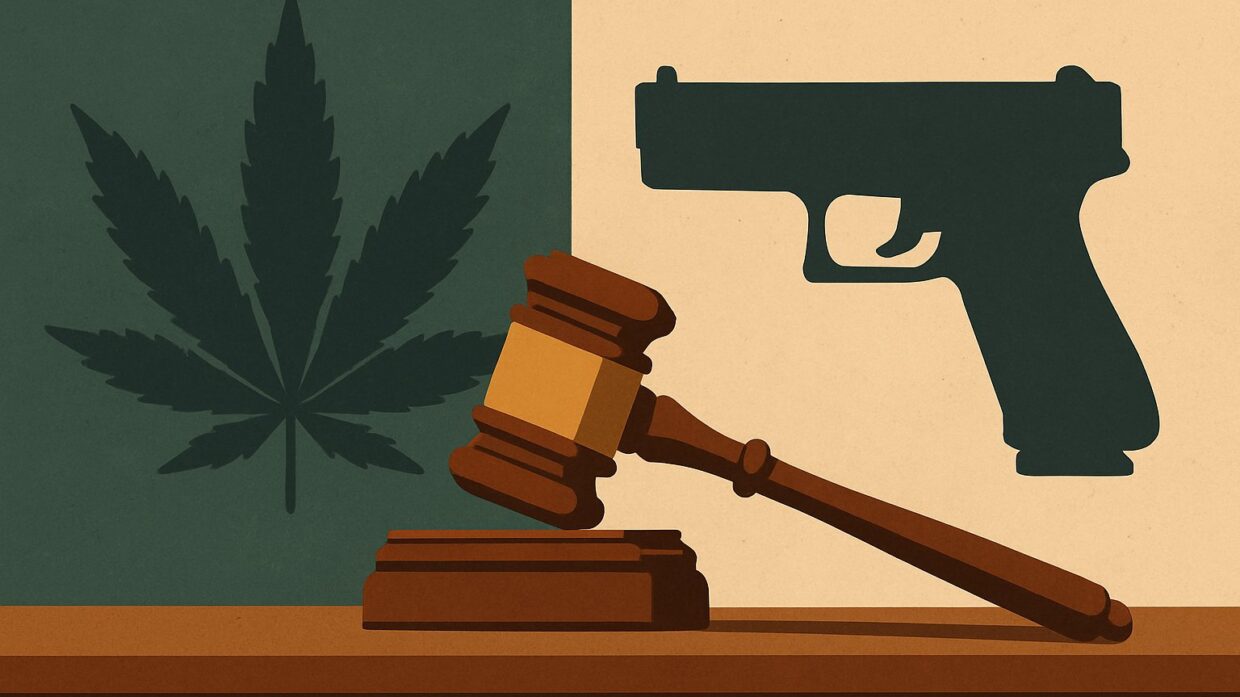
The Supreme Court issued a unanimous decision in United States v. Hemani that narrows the reach of a federal gun statute, but the framing of that decision depends entirely on which statute was the actual basis for the ruling and what the court said about its scope.
The documented facts are these: All nine justices agreed that the federal law barring "unlawful users" of controlled substances from possessing firearms cannot be applied categorically to every person who has ever used marijuana. The court found the statute as applied to a Texas man who regularly used cannabis was unconstitutionally vague. The same statute appears in the charging document against Hunter Biden, though Biden's case involves cocaine and crack cocaine use, not marijuana. Left outlets emphasize the Second Amendment protection dimension. NPR frames the story as "a marijuana user who was barred from owning guns" and a ruling that protects Second Amendment rights. Vox leads with the personal tone: "Do you like to smoke marijuana? Do you also enjoy firearms?" Both emphasize the constitutional dimension and the court's protection of gun rights for drug users. Neither outlet foregrounds the Hunter Biden connection.
Right outlets lead with Hunter Biden. Fox News opens with "the same law used to prosecute Hunter Biden." The Daily Wire calls it "a unanimous blow to gun law used in Hunter Biden case." National Review's headline centers the statute's Second Amendment violation. The framing serves a strategic function: it converts a Second Amendment ruling into a story about a prosecution that has become politically significant. The right does not claim the decision exonerates Biden or invalidates his conviction. Instead, the framing elevates the decision by attaching it to the Biden case, suggesting the court has now restricted the government's prosecutorial tools.
What neither side foregrounds is the critical distinction that Hunter Biden's charges involved actual cocaine and crack cocaine use, not marijuana. The statute at issue applies to all unlawful drug users, not only marijuana users. The Hemani decision may narrow how the statute is applied, but the court's vagueness finding does not automatically invalidate prosecutions under the same statute for harder drugs. The available reporting does not establish whether the Hemani ruling directly affects Biden's case, his sentence, or the government's ability to prosecute similar cases involving non-marijuana drugs.
The right's connection between Hemani and Hunter Biden is directionally accurate but scope-limited. Hemani does restrict the statute's application. Whether that restriction extends to the circumstances of Biden's cocaine case remains legally unresolved in the public reporting. The left's omission of the Biden connection is editorial choice that leaves readers unaware that a Second Amendment case has immediate relevance to an ongoing political prosecution. Neither framing captures that the unanimous decision suggests broad judicial agreement that the statute as written posed real constitutional problems, regardless of which drug is involved.
The underlying question is whether Hemani signals a narrower application of drug-user prohibitions across the board or merely requires prosecutors to prove more specific dangerous behavior. That answer reshapes both the scope of the ruling and its actual consequence for prosecutions like Biden's.
The Hemani decision restricts a statute used across thousands of federal drug-gun prosecutions annually, yet its actual scope remains deliberately obscured by partisan framing. The court found the law unconstitutionally vague as applied to marijuana users, but Hunter Biden's case involves cocaine and crack cocaine. Neither left outlets nor right outlets clarified whether the vagueness finding extends to harder drugs or only to cannabis, leaving prosecutors and defendants without clear guidance on how to navigate identical charges involving different controlled substances. This ambiguity will ripple through federal courts as judges decide which prosecutions survive the ruling and which collapse, potentially affecting sentencing in cases already adjudicated. The decision's real institutional impact depends on a legal question the news coverage has entirely avoided: whether constitutional protection for drug users varies by substance or applies uniformly to all unlawful drug possession.