Photo: Well This Is News
Trump dismantles ocean monitoring system as super El Niño poses climate risks
Climate forecasters seek ocean data amid Trump administration budget reductions
Trump administration ocean cuts threaten El Niño forecasting as extreme weather impacts emerge globally
Key Takeaways
- The planned ocean monitoring cuts create a real timing problem because El Niño is already showing measurable effects on India's monsoon and weather patterns, but neither side has disclosed which specific ocean systems are being cut or whether they provide data unavailable from satellites or international sources.
- Ocean buoys, satellites, and monitoring networks do feed into El Niño forecasting models with observable consequences for agriculture and infrastructure planning, but the reporting never establishes whether the capability losses would be material or whether forecasting timelines affecting major decisions months in advance would actually be degraded.
- The core question,how much ocean data is actually necessary for forecasting accuracy,remains unanswered because the story conflates budget reductions with capability elimination without revealing what redundancy exists with other U.S., international, or commercial monitoring systems.
The Analysis
The Trump administration's planned cuts to ocean observation systems and the simultaneous emergence of a significant El Niño event create a timing problem that obscures a deeper institutional question: how much real-time ocean data is actually necessary for weather forecasting, and what specifically gets lost when monitoring systems are reduced.
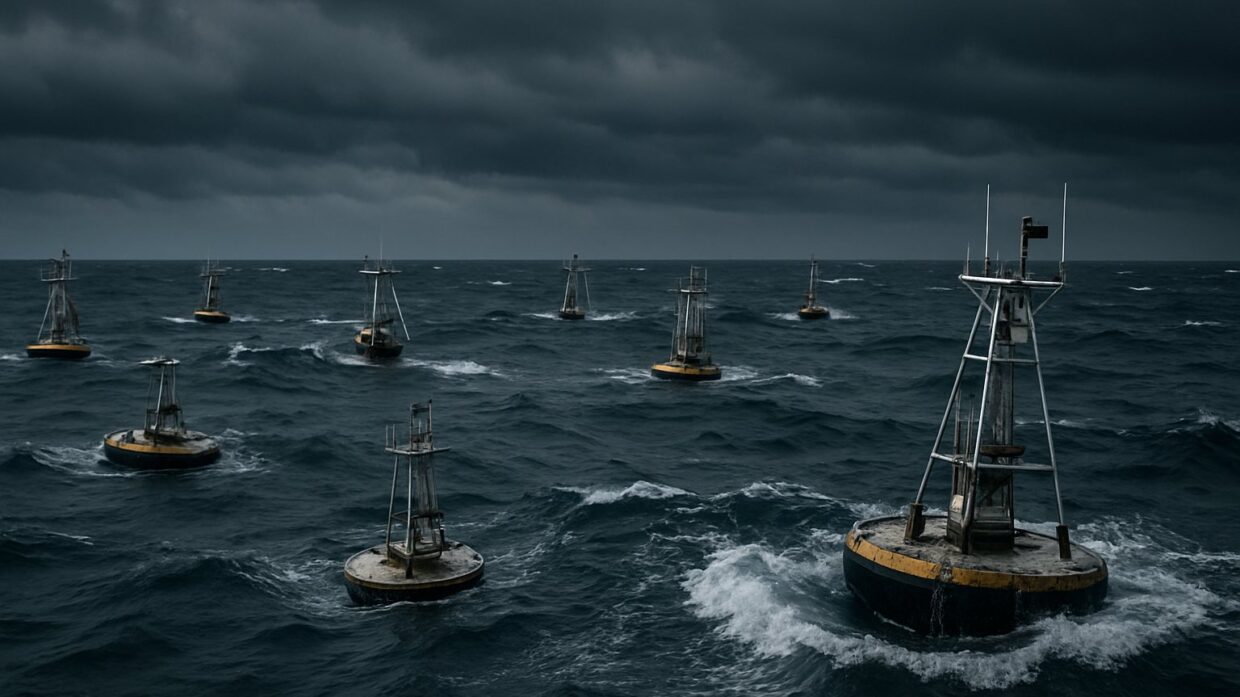
The documented facts establish the scope of what's at stake. Ocean buoys, satellites, and monitoring networks provide data that feeds into El Niño forecasting models used by meteorologists and agricultural planners worldwide. A super El Niño, the strongest category of this recurring climate pattern, alters precipitation patterns across multiple continents. India's monsoon has already arrived late and is expected to be weaker than normal, consistent with early El Niño effects. These effects are observable and consequential: the 2026 World Cup in North America is expected to face extreme heat conditions that may affect athlete performance and match scheduling.
The left frame, articulated by Vox and Mother Jones, treats the budget cuts as an active choice to degrade scientific capability during a predictable crisis. The language used is "dismantle" and "severely degrade," words that imply deliberate destruction rather than budgetary trade-offs. This framing emphasizes the timing problem: cuts arrive as a super El Niño is arriving, creating a narrative of reckless risk. What this framing does not foreground is whether the specific ocean systems being cut are redundant with satellite or international monitoring data, or whether they represent unique observational capacity. The reporting does not establish what forecasting accuracy would be lost versus what would be preserved through alternative data sources.
The right frame, less explicitly stated in these sources, would likely emphasize fiscal prioritization and question whether the U.S. government should maintain observation systems that other nations and international agencies also operate. This perspective appears minimally represented in the available reporting, leaving unclear whether federal ocean cuts overlap with capabilities maintained by NOAA, international partners, or commercial satellite operators.
What neither frame fully captures is the history of El Niño forecasting accuracy before and after the expansion of ocean monitoring systems. The available reporting does not establish whether the planned cuts would eliminate redundant sensors or degrade unique monitoring capacity. It also does not address what forecasting lag time would exist if real-time ocean data decreased, or whether delayed data would materially affect agricultural planning in India, fisheries management, or World Cup scheduling decisions made months in advance.
The underlying question is whether ocean observation capacity is genuinely threatened with elimination or whether the narrative conflates budget reductions with capability loss. A more complete picture would require disclosure of what specific systems face cuts, what data they provide that is not available from other sources, and what forecasting timelines would actually be affected. Until that specificity enters the reporting, the story remains framed as either reckless governance or reasonable budget management, neither of which can be evaluated against the actual stakes.
The real headline is narrower than either side is claiming: The Trump administration is reducing ocean monitoring spending at the moment a major El Niño is beginning to show measurable global effects, which creates a credible timing problem for forecasting,but the specific capability losses remain undisclosed.
Cutting ocean observation systems during an emerging El Niño creates immediate forecasting gaps for agricultural planning across Asia and Africa, where delayed monsoon predictions directly affect crop planting decisions affecting millions of subsistence farmers. India's weakened 2026 monsoon forecast already reflects this pattern, and without real-time buoy data feeding into models, meteorologists lose the ability to issue timely warnings for extreme precipitation swings. The institutional damage extends to NOAA's forecast accuracy metrics, which become measurably degraded within a single forecast cycle, making it harder to justify budget requests in future years. International partners operating shared monitoring networks may compensate partially, but the U.S. government loses independent verification capacity and cannot pressure other nations to maintain standards when it cuts its own contribution.