Photo: Well This Is News
Pence Breaks With GOP, Says Party 'Lost Our Way' on Paxton Nomination
Pence Slams Democrats as 'Lost Their Mind' Despite GOP Concerns
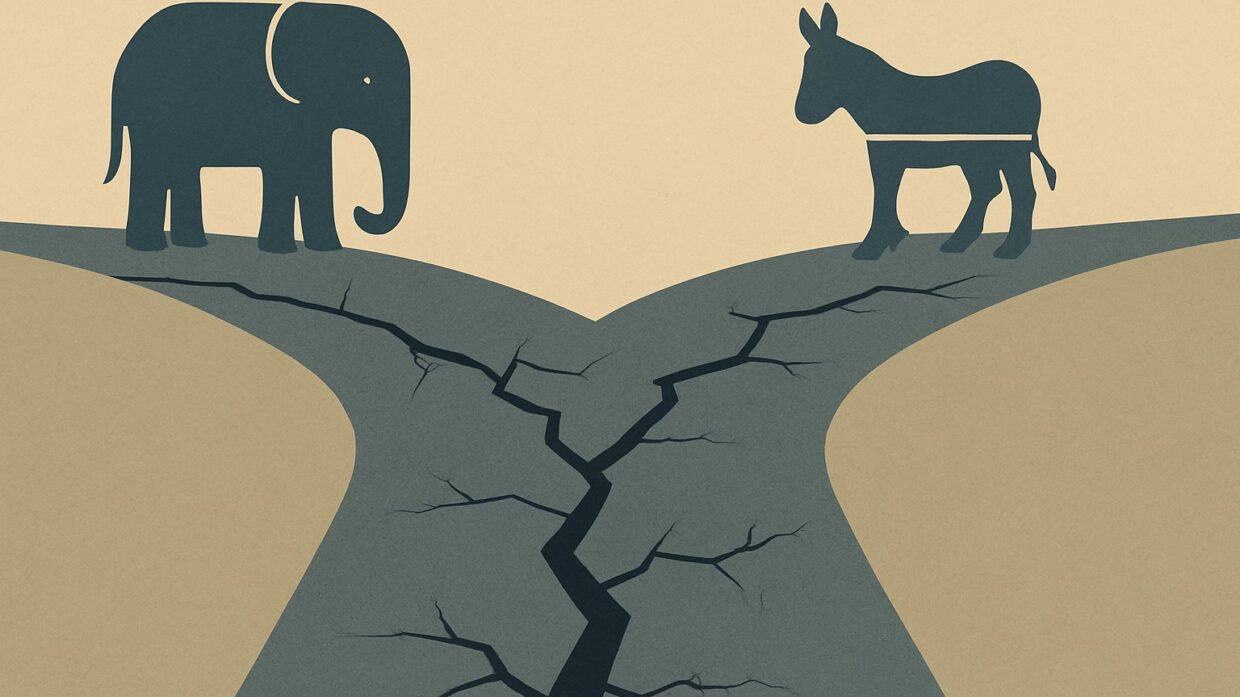
Pence Criticizes Both GOP and Democrats After Paxton Primary Victory
Key Takeaways
- Pence used asymmetrical language intentionally: calling Republicans' problem a directional loss while calling Democrats' problem a loss of rationality, suggesting different diagnoses of each party's failures rather than equal moral equivalence.
- Pence opposes both a Republican primary result and a Democratic-era policy while serving in neither administration, indicating he is expressing disaffiliation from both parties' current direction rather than pivoting toward either one.
- Neither party's coverage adequately captured that Pence is defending institutional conservatism as a principle, not endorsing the other side, which explains why he simultaneously criticized Trump administration conduct and Biden-era policy.
The Analysis
Mike Pence delivered a simultaneous critique of both major parties on NBC's Meet the Press, but the framing of his comments reveals what each side is emphasizing and what both sides are leaving out.
Pence's exact words matter here. He said Republicans have "lost our way" specifically after Ken Paxton's primary victory over John Cornyn, the longtime incumbent. He said Democrats "have lost their minds." The asymmetry in language is deliberate: "lost our way" describes a directional problem within an institution Pence belonged to. "Lost their minds" is a diagnosis of irrationality. Pence also stated the Trump administration has "departed" from conservative principles, a claim that applies to the sitting president's current conduct. He called a DOJ compensation fund for January 6 victims "deeply offensive," centering his objection on the prospect of payments to those who assaulted police.
The left's coverage, via MSNBC and Kentucky Governor Andy Beshear, emphasizes Pence's GOP critique almost exclusively. Beshear immediately translated the comments into electoral opportunity, saying Texas is "in play" for Democrats because of internal Republican division. The framing treats Pence as validating the Democratic position on Republican party direction. What this coverage does not foreground is that Pence used identical language-of-condemnation toward Democrats, just with different phrasing. The left's frame allows readers to conclude that Pence agrees the GOP is the primary problem, when his actual statement distributes concern equally, just differently worded.
The right's coverage, via Washington Examiner, leads with Pence's statement about the DOJ compensation fund and his criticism of the Biden-Harris administration's direction. This frame positions Pence as warning against Democratic overreach. The Washington Examiner does not bury Pence's GOP concerns, but it does lead with his Democratic criticism and his opposition to a Biden-era policy. What this framing leaves underemphasized is the substance of Pence's critique of Trump: that the current administration has abandoned conservative principle. The right's frame allows readers to conclude Pence is primarily concerned about Democratic conduct, when his statement addresses both parties' departures from what he views as proper conservative governance.
What neither frame adequately captures is the underlying political reality Pence is navigating. He is a former Republican vice president who served in an administration he now says has departed from conservative principle. He opposes a Biden-era policy. He also opposes a Republican primary result. Pence is not endorsing Democrats; he is expressing disaffiliation from both parties' current direction. The coverage treats his words as a referendum on Republican fitness, when they are actually evidence of a conservative figure finding neither major party aligned with his stated principles. Paxton's primary victory over Cornyn matters specifically because Cornyn was the institutionalist, and Paxton won anyway, suggesting the GOP base moved in a direction Pence rejects. But Pence's simultaneous critique of Democratic governance suggests his problem is not simply with Trump or Paxton individually, but with the trajectory of both parties.
The missing context is Pence's post-2020 trajectory. He broke with Trump over January 6 certification, opposed Trump's 2024 candidacy, and has positioned himself as defending institutional conservatism. His current comments are consistent with that positioning, not evidence of Democratic sympathy. Both framings treat him as more ideologically aligned with their side than the evidence suggests.
Pence's bifurcated critique exposes how partisan media manufactures consent by selectively amplifying criticism of the opposing party while downplaying equal condemnation of their own. MSNBC's focus on his GOP concerns and the Washington Examiner's emphasis on his Democratic objections both misrepresent his actual position: a conservative seeking institutional legitimacy from parties he views as fundamentally misaligned with his principles. This fragmentation of his unified message across partisan outlets means voters receive contradictory interpretations of identical statements, preventing the broader electorate from understanding that institutional conservatism itself has lost purchase in both parties. When symmetric criticism gets translated into asymmetric narratives, the public cannot accurately assess whether the problem is party leadership or the ideological framework they all share.