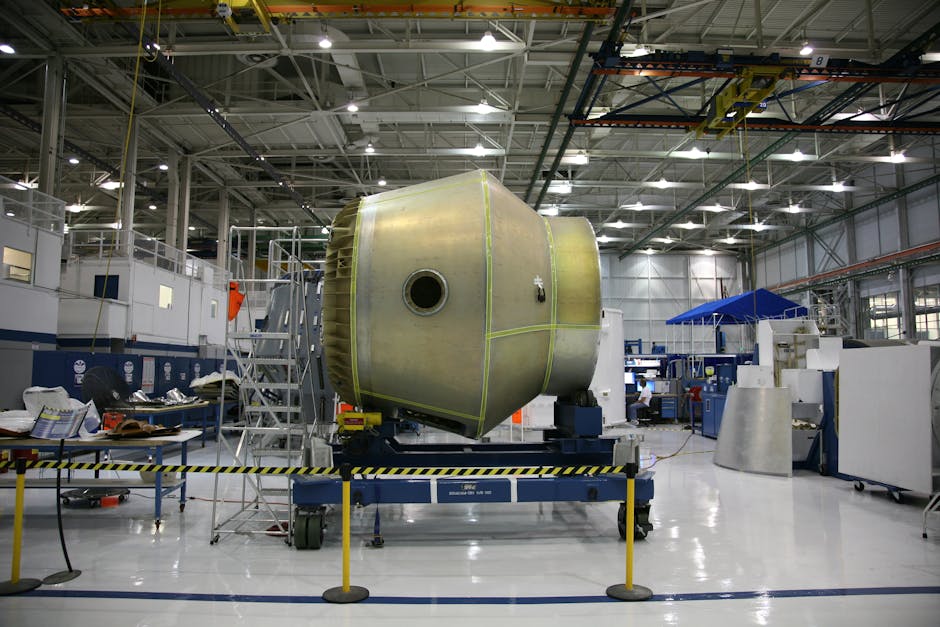
Photo: SpaceX
EPA warns overheated chemical tank will fail as crews battle explosion risk
Low-volume chemical release may contain Garden Grove crisis, EPA suggests
California chemical tank faces controlled release as 50K evacuation continues
Key Takeaways
- EPA Administrator Zeldin used the phrase 'will fail' to describe the tank, but left and right outlets extracted opposite meanings from the same statement by emphasizing different interpretations of what 'failure' means.
- Neither major news organization reported what chemical was actually in the tank, what operational errors or maintenance failures caused the overheating, or what toxic exposure levels would pose genuine danger to the 50,000 evacuated residents.
- The core unresolved question is whether this was a single preventable equipment failure or a sign of systemic vulnerabilities in how industrial facilities near populated areas are operated and regulated.
The Analysis
An overheated, pressurized chemical tank at an aerospace facility near Garden Grove, California prompted the evacuation of 50,000 people, but what happened next,and what each side chose to emphasize,reveals fundamentally different interpretations of the same crisis. EPA Administrator Lee Zeldin said the tank "will fail," but whether that failure means an explosion or a controlled leak depends entirely on which official statement you read first.
The verified facts: The tank, located at an unnamed Orange County aerospace plant near Disneyland, overheated over the weekend. Crews worked to cool it. By Sunday, officials identified a potential crack in the tank's bottom. NPR reported 50,000 under evacuation orders. Zeldin's statement to The Guardian said the tank "will fail." Bloomberg reported that same statement with different framing: the EPA believes a "low-volume release" is now "most likely." Both quotes come from the same EPA chief, the same weekend, describing the same tank.
The left-leaning framing emphasizes catastrophic risk. NPR's headline uses the words "cracked," "malfunction," "overheating," and "leak or explode" in rapid succession. MSNBC reporters describe crews "racing to prevent" an explosion and avert a "disastrous worst-case scenario." The Guardian quotes Zeldin saying the tank "will fail",language that foregrounds inevitability and danger. That framing leaves out Zeldin's qualifier: he said failure would likely mean a controlled leak, not an explosion. The emphasis shifts the reader's attention toward the worst scenario rather than the most probable one.
The right-leaning framing emphasizes mitigation and relative improvement. The Washington Examiner leads with Zeldin's statement that a "low-volume release" may "contain" the crisis. That language treats the crack as a positive development,pressure escaping in a controlled way rather than building catastrophically. The framing leaves out the inherent risk still present: "low-volume release" still means toxic chemical vapor in the air near 50,000 residents. It also omits the uncertainty: officials identified a "potential" crack, not a confirmed one.
What neither side foregrounds is the facility's operational history or why this tank reached dangerous temperatures in the first place. The reporting does not establish whether the tank malfunction resulted from equipment failure, maintenance lapses, staffing issues, or something else. That gap matters because it determines whether this was a single preventable error or a systemic vulnerability. The sources also do not detail what chemical was in the tank or what exposure levels would constitute genuine danger to evacuated residents. Bloomberg identifies it as "flammable chemicals." The Guardian and Washington Examiner do not name the substance at all.
Zeldin's own words reveal the interpretive split. Saying a tank "will fail" is technically true if failure includes a controlled leak. But when an audience hears "will fail" in connection with a toxic chemical facility, the default reading is catastrophic failure. The EPA chief used language that was technically accurate but rhetorically loaded, allowing different outlets to extract different meanings from the same statement.
The underlying question is not whether the tank will release chemicals,officials agree it will. The question is whether Orange County's facility had operational or regulatory safeguards that would have prevented this overheating, and what will change as a result.
The real consequence of this crisis lies not in whether the tank leaks but in what the facility was doing before it overheated. Regulators and politicians are debating probability and severity while avoiding the fundamental question: what operational or maintenance failures allowed a pressurized chemical tank to reach dangerous temperatures in the first place. If this incident reveals systematic gaps in how aerospace facilities manage hazardous materials, enforcement patterns will shift and similar facilities nationwide may face new inspections. If it was isolated negligence at one plant, the policy response will be minimal. The framing battle over "controlled release" versus "catastrophic failure" obscures which outcome actually occurred, and that determines whether 50,000 people evacuated because of a fixable mistake or an industry-wide vulnerability that remains unaddressed.